Abdul Afolabi · Data Engineer
Numbers your business can trust
I help companies move from spreadsheets, scattered tools or legacy systems to a cloud data platform whose numbers reconcile back to source.
Scroll to follow the data, or skip ahead
Step 1 of 7 · Sources
Data starts out scattered
A business keeps records in lots of places: an old core system, a CRM, a pile of spreadsheets. Each one speaks its own language, like this payment record from a system built in the 1980s.
Engineer’s term: Source systemsStep 2 of 7 · Ingest
Copy only what changed
Every night the pipeline asks each system what changed since yesterday and copies just that, a bit like a phone backup. On a typical day that’s a tiny fraction of the records.
Engineer’s term: Change data captureStep 3 of 7 · Bronze
Keep an exact copy
Records land exactly as they arrived, stamped with when they were loaded. Nothing is edited, so there’s always original evidence to check against.
Engineer’s term: Raw / bronze layerStep 4 of 7 · Silver
Clean and translate
Codes become words, dates and amounts get one format, and duplicates are removed. Now records from every system speak the same language.
Engineer’s term: Cleansed / silver layerStep 5 of 7 · Gold
Organise it for questions
Records are arranged around how the business asks questions: what was paid, on which claim, when, and to whom. That’s what makes reports fast and consistent.
Engineer’s term: Star schema / gold layerStep 6 of 7 · Reconcile
Prove it’s right
After every load the warehouse recalculates key totals and checks them against the original system. If they don’t match to the penny, nothing gets published.
Engineer’s term: Reconciliation testsStep 7 of 7 · Insight
Numbers people trust
Dashboards now run on data that’s been checked end to end, so meetings are about decisions instead of whose spreadsheet is right.
Engineer’s term: Semantic model & BI

About me
From analyst to engineer
I spent my early career as a data analyst, building the dashboards everyone relied on and finding out the hard way how often the numbers underneath them were wrong. That's why I moved into data engineering: to fix the problem at the source.
Today I build cloud data platforms on Microsoft Azure, with Data Factory and Microsoft Fabric, most recently for a US insurer, migrating a decades-old system into a governed warehouse where every number is reconciled back to source.
What I build
How I can help you →Ingestion & change capture
Read-only extraction from legacy and SaaS sources, journal-based CDC with safe fallbacks, idempotent and resumable loads.
Lakehouse & modelling
Medallion layers on Delta, Kimball star schemas, conformed dimensions and governed semantic models.
Data quality you can prove
Two-sided reconciliation against the source after every load, load audit and lineage, guards for silent failures.
Platform as code
Terraform, containerised jobs, CI/CD with secret scanning, spec-driven generation and deploy provenance.
Featured case study
A reconciled claims warehouse beside a legacy mainframe
Lakehouse for a medical liability insurer whose system of record is a decades-old IBM i platform that can't be switched off. Every load is proven against the live source.
- ~80% lower platform capacity cost after moving silver and gold to incremental loads on scheduled compute
- ~100M rows across ~160 source tables, refreshed daily in ~90 minutes
- ~70 business measures reconciled against the live source after every load
- Daily change capture moves ~0.02% of rows instead of a full reload
- Infrastructure, semantic model and security roles all deployed from code
- Microsoft Fabric
- PySpark
- Delta Lake
- Python
- Terraform
- Azure Container Apps
- GitLab CI
- Power BI / TMDL
- IBM i (DB2)
Experience
Full resume →- Jun 2026 – Sep 2026
Data Engineer (Contract Consultant)
Exequt · client: US medical professional liability insurer
- Led the technical audit and recovery of an AI-assisted migration from a legacy IBM i (DB2) system to a Microsoft Fabric warehouse, deployed entirely through CI/CD.
- Modelled the claims domain (claims, payments, reserves, recoveries, reinsurance, written premium) for actuarial and finance users, reconciled to the legacy system after every load.
- Cut Fabric capacity cost by ~80% by moving the always-on silver and gold layers to incremental loads on scheduled compute.
- Jul 2022 – May 2026
Data Engineer
Emeria, London
- Migrated the on-premises SQL Server data platform to Azure (ADLS Gen2, Synapse, Azure SQL Database, orchestrated by Data Factory), consolidating Qube MRI, Reapit and DataStation into one source of truth, with Power BI reporting that saved 8 hours a week of manual processing.
- Then migrated that Azure platform onto Microsoft Fabric, with Power BI reading directly from Fabric (Direct Lake) for faster report refreshes.
- Built reusable, parameterised ELT with Fivetran metadata, dbt vars, macros and artifacts, and Python UDFs, on a medallion architecture across AWS and Microsoft stacks.
- Jul 2021 – Jul 2022
Data Analyst Lead
Modulr Finance, UK
- Owned data governance for the CRM data-warehouse migration when new systems were adopted.
- Worked with data engineering on management-information pipelines and fixed data quality issues, improving onboarding, pipeline and forecasting reporting by 15%.
- Built event-driven email alerts on key business events, cutting response time by 20%.
- Feb 2019 – Jul 2021
Data Analyst Specialist
Tutora, UK
- Replaced hand-built reports from raw data dumps with automated data collection and dashboards.
- Built a Python machine-learning customer segmentation, surfaced in Power BI, for targeted marketing campaigns.
- Saved 10% of total spend and 20% of sales and marketing analysts’ time.
Domains
- Insurance: claims, reserves, reinsurance
- Property management
- Fintech
Languages
- Python
- SQL
- PySpark
- DAX
- Jinja (dbt)
Platforms
- Azure Data Factory
- Azure Synapse
- Azure SQL Database
- ADLS Gen2
- Microsoft Fabric
- SQL Server
- Snowflake
- AWS
- IBM i (DB2)
Data
- dbt
- Fivetran
- Delta Lake
- Kimball modelling
- Change data capture
- Data governance
Delivery
- Terraform
- Docker
- GitLab CI
- Power BI / TMDL
- Claude agents & MCP
Writing
All posts →Your legacy system is the answer key
Nine principles for building a data warehouse beside an operational system you can't switch off, and proving every number against it.
Data project process documentation
Data project process documentation Having a standard process around the business is nice. However, having it documented is nicer as it helps the business reduce downtime when…
Framework for executing data projects
Framework for executing data projects Following a framework when executing a data project could help reduce downtime, plan ahead, and have an established process in the…
Earlier work: data analysis
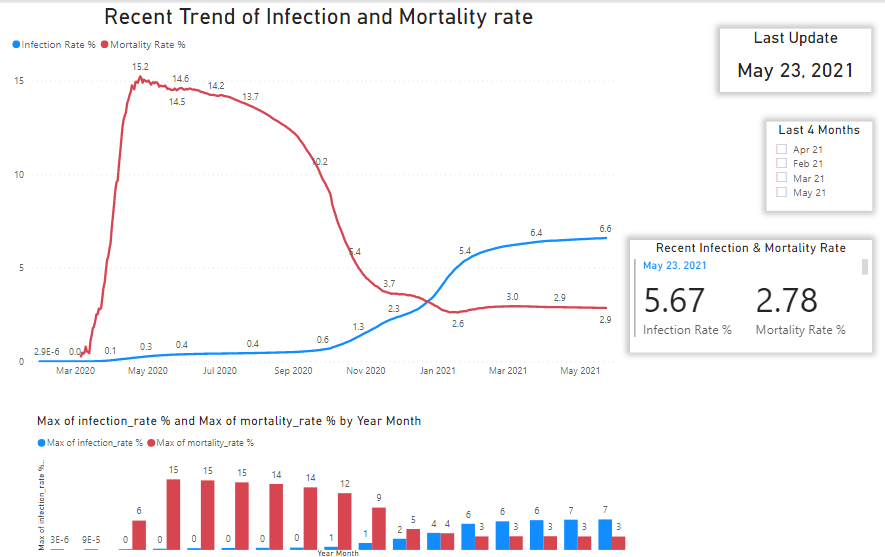
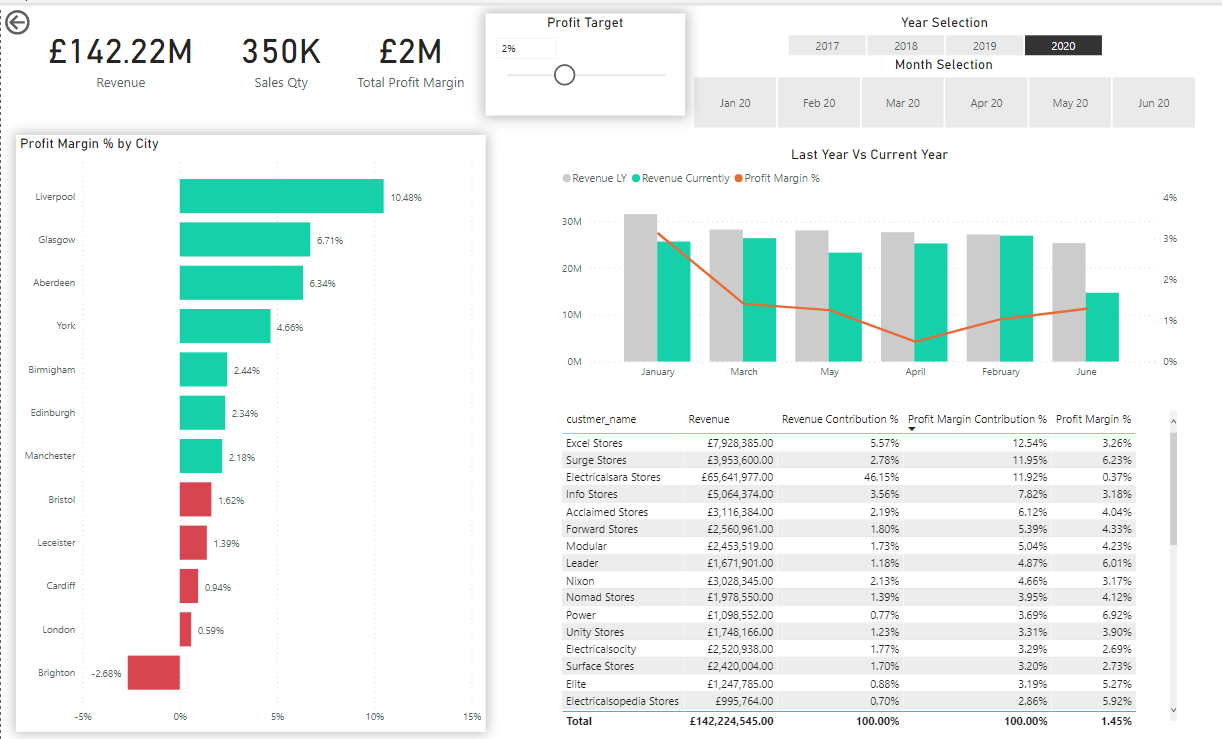
Before data engineering I spent several years as a data analyst. These projects are from 2021–2022.